No products in the cart.

Contact us and claim a discount Contact us

Human Kidney Model
Call for Price
Base Dimension: 15 x 9 x 28cmColor: Natural Human Kidney colorDescription:
- The 3D “Human Kidney Model” displays the detailing structure of dissected kidney used to study the internal portion of human kidney.
- The model includes removable parts which makes easier for medical professionals to study in details.
- Whereas Identification Key Card includes (key functions Kidney, Cushion Fat, Hilum, Artery, Vein, Outer Border, Ureter, Cortical Substance, Pyramid and Pelvis)
Human Larynx Model
Call for Price
Base Dimension: 19 x 7.5 x 22cmDescription:
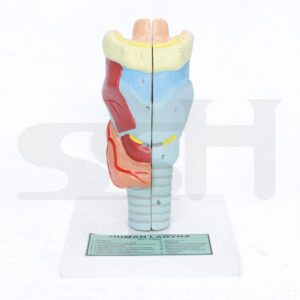
- The 3D “Human Larynx Model” displays the detailing structure of dissected Larynx used to study the internal portion.
- The model includes removable parts which makes easier for medical professionals to study in details.
- Whereas Identification Key Card includes (key functions Hyoideum, Cornu Minus Ossis Hyoidei, Cornu Superius Cartilaginis Thyreoideae, Cartilago Thyreoidea, Ligamenta Ceratocricoideum Anterius, , Ligamenta Ceratocricoideum Medium, Incisura Thyreoidea Superior, Ligamenta Thyreohydideum Medianum, Thyroid Gland, Epiglottis, Cartilago Cricoidea (Lamina), Cornu Majus Ossis Hyoidei, Membrana Thyrohyoidea, Cartilago Arytenoidea, Cornu Inferius Cartilaginis Thyroideae and Trachea).
Human Liver Model
Call for Price
Dimension: 12 x 18 x 21cmColor: Dark MaroonDescription:
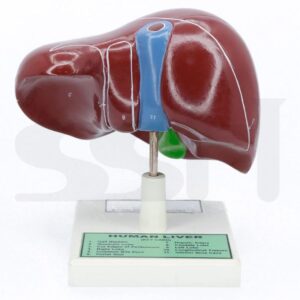
- The 3D “Human Liver Model” displays the detailing structure of Liver with Gall Bladder as a model.
- The model is greatly enlarged in size, helps medical professionals to study.
- Whereas Identification Key Card includes (key functions Gall Bladder, Quadrate Lobe, Cut Edges of Peritoneum, Right Lobe, Common Bile Duct, Portal Vein, Hepatic Artery, Caudate Lobe, Left Lobe, Longitudinal Fissure and Inferior Vena Cava).
Human Pregnancy Model
Call for Price
Description:
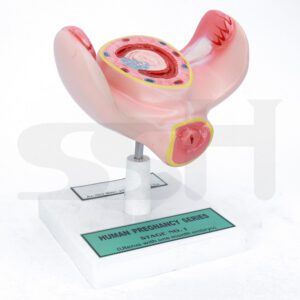
- This 3D “Human Pregnancy Model” is an excellent displayed model to study human pregnancy and its different stages in detail.
- The model is greatly enlarged in size, makes it more professional to study in details.
- This complete model contains set of 8 pregnancy models attached on a stand displays different development stages of human.
- Whereas different stages includes:
- Stage 1: Uterus with one month Embryo.
- Stage 2: Uterus with two months Embryo.
- Stage 3: Uterus with three months Embryo.
- Stage 4: Uterus with four months Fetus in Ventral position.
- Stage 5: Uterus with five months Fetus in breech Presentation position.
- Stage 6: Uterus with six months Fetus in Transverse position.
- Stage 7: Uterus with twin five months Fetuses.
- Stage 8: Uterus with seven months Fetuses.

Human Skelton Model
Call for Price
Color: White/Natural Bone colorDescription:
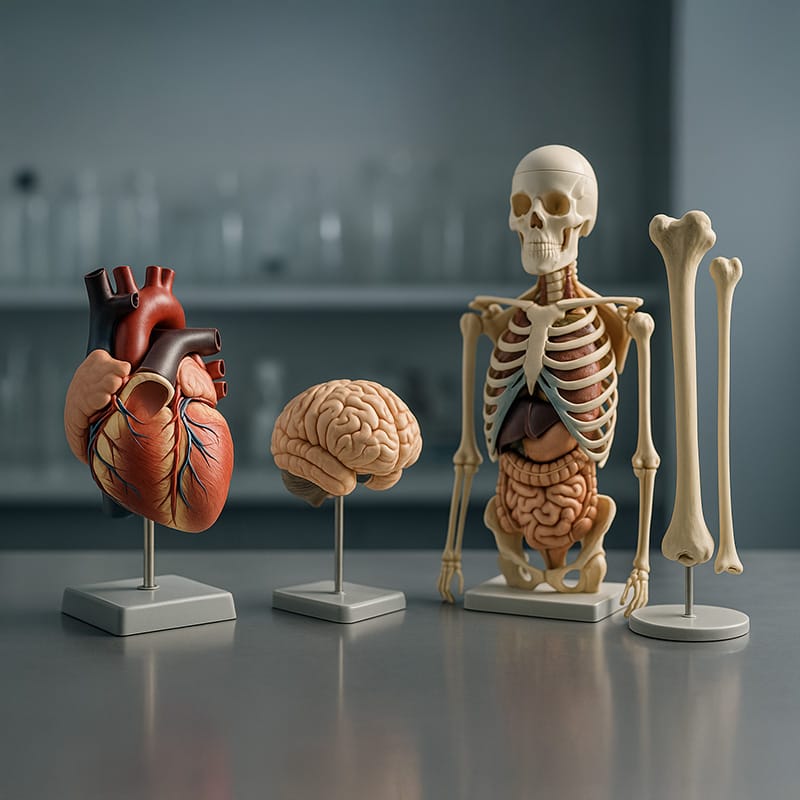
- This 3D “Human Skelton Model” comes with stand, is an ideal approach for medical students.
- Skelton is used to study human bone-anatomy in detail.
- Along with the bones Spinal Nerves can also studied easily.
- Skelton model can be visualized to study an overview of human bones.
Human Stomach Model
Call for Price
Base Dimension: 12 x 18 x 21cmDescription:
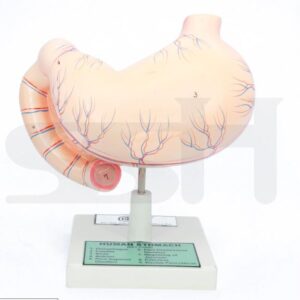
- The 3D “Human Stomach Model” displays the detailing structure of Stomach used to study the internal portion.
- The model includes removable trisected parts which makes easier for medical professionals to study in details.
- Whereas Identification Key Card includes (key functions Oesophagus, Fundus, Body, Antrum, Duodeni, Pars Descendens Duadeni, Beginning of Jejunum, Pancreas and Ductus Pancraticus).
Free Wordlwide delivery
Lorem ipsum dolor sit amet, consectetu adipiscing elit,
sed eiusmod lorem tempor incididunt.
24/7 Support Center
Lorem ipsum dolor sit amet, consectetu adipiscing elit,
sed eiusmod lorem tempor incididunt.
Filter by categories
Sorry, we couldn't find what you're looking for
Sort by producents
Sorry, we couldn't find what you're looking for