No products in the cart.

Contact us and claim a discount Contact us
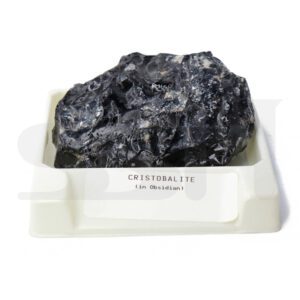
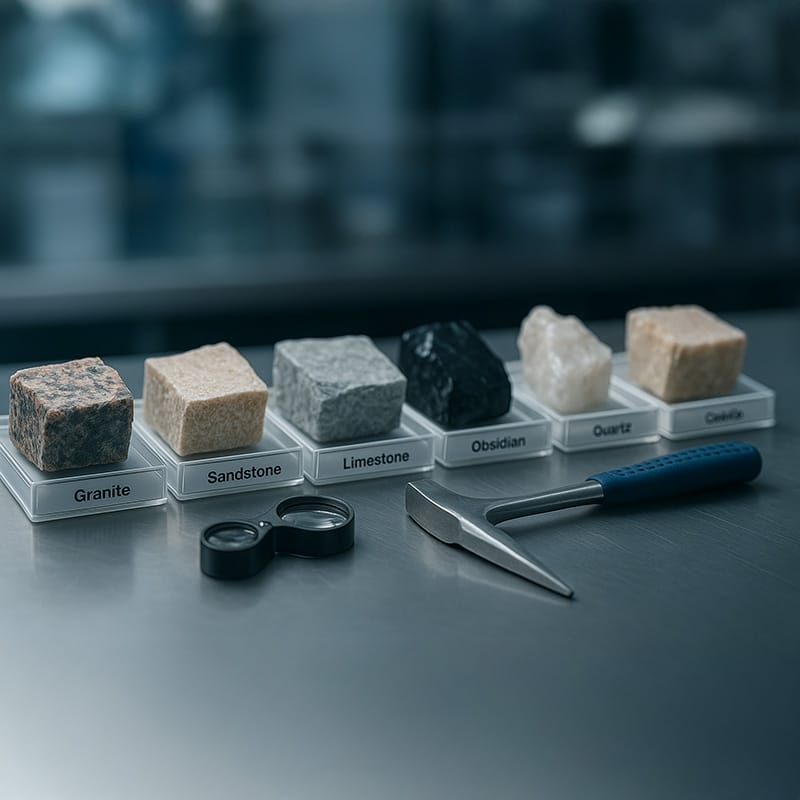
Cristobalite (In Obsidian)
Call for Price
Details:
- Different sizes of Cristobalite (In Obsidian) samples are available, helps to process different studies of Geology department.
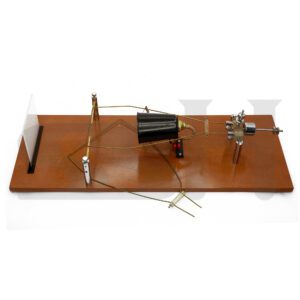
Current Balance
Call for Price
Description:
- The current balance is used to measure the force of repulsion between identical, oppositely directed, currents in parallel conductors. .This shows a direct link between the mechanical forces of Newton and the electromagnetic forces of Ampere and Maxwell.
- This apparatus is extremely delicate and must be handled with a very light touch.
- The current balance consists of a rectangular conducting frame which causes the current passes by entering and exiting through liquid gallium. The entire frame is suspended by a 0.006-inch diameter high strength torsion wire.
- The rectangular frame is counter-balanced by a long beam having a movable counter-balance mass on it and a magnetically damped vane on its end.The vane also serves as a zero-position indicator. Directly below the long side of the rectangular frame is a parallel conductor carrying the same current in the opposite direction.
- The height of this conductor is adjustable to allow different separations between the conductors. Each end can be lowered or raised independently of the other to make the two conductors parallel.
- The separation adjustment screws have a 1 mm pitch and are used to adjust the centre-to-centre conductor separation from 3.2 mm to 15 mm in increments of 0.05 mm.
- One end of the torsion support wire is fastened to a rotatable degree dial which can be rotated a total of three revolutions, one-and-a-half revolutions in either direction from the centre equilibrium position.
- The other end of the torsion wire can be rotated only about 200 degrees and is used to make fine adjustments in the zero equilibrium position. The torsion balance has a sensitivity of about 3 degrees per milligram of force.
- A change of less than 2 degrees on the degree dial is discernible.
- The balance has a 20 Amp fuse to protect the equipment from damage. Good measurements can be made with a current of 5A and a maximum working current of 15 A is recommended.
New
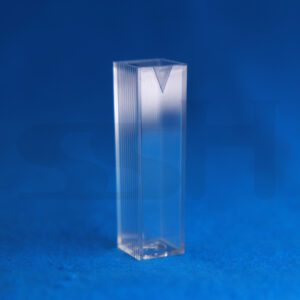
Cuvette disposable Without lid
Call for Price
Details:Product Type: Disposable CuvetteDesign: Standard rectangular cuvetteLid: Without Lid
- The disposable cuvette without a lid is a lightweight and convenient type of cuvette suitable for general laboratory and spectrophotometric use.
- Because of its clear optical structure, samples can be measured efficiently and there is less need to clean the cuvette between measurements.
- The fact that it does not have a lid makes it simple and quick to fill with and handle samples. It is suitable for use in schools, colleges, universities, research laboratories, quality-control laboratories and industrial testing situations.
New
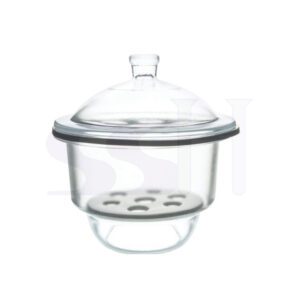
Desiccator with Porcelain Plate, 250Mm Dia
Call for Price
Details:Product Type: Laboratory DesiccatorMaterial: Borosilicate GlassDiameter: 250 mmPlate: Porcelain Perforated PlateDesign: Glass Cover with Knob
- The Desiccator with Porcelain Plate, 250 mm in diameter is a piece of laboratory equipment which is used for drying, cooling and storing materials that are sensitive to moisture in a controlled atmosphere of low humidity.
- It has a transparent borosilicate glass body, a glass lid that fits closely, and a perforated porcelain plate for holding the samples above the desiccant.
- Because of its sturdy build it is appropriate for use in routine laboratory work, for the preservation of samples and for carrying out experiments which are sensitive to moisture in schools, colleges, universities, laboratories and research institutes.
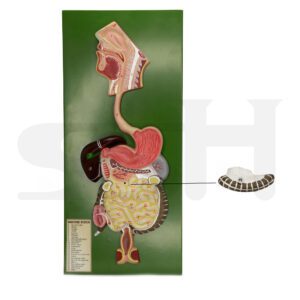
Digestive System Model
Call for Price
Base Dimension: 13" X 12"Color: Natural Human’s Organs colorDescription:
- The 3D “Digestive System Model” provides details to study the structure of “Humans Digestive Systems Anatomy” such as:
- Stomach is used to view internal structure.
- Large and small Intestine included with removable transverse colons, used to study pancreases.
- This system is also used to trace the flow procedure of food.
- Where as Identification Key Card includes (key functions Nasal Cavity, Mouth, Tongue, Teeth, Pharynx, Trachea, Medulla Oblongata, Oesophagus, Stomach, Pyloric Part, Duodenum, Liver, Gall Bladder, Pancreas, Gastric Artery & Vein, Colon, Ascending Colon, Sigmoid Colon, Anal Canal and Anus).
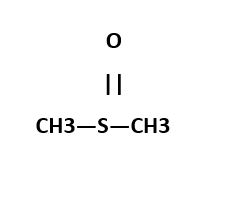
Dimethyl Sulfoxide (DMSO)
Call for Price
Chemical Formula: C2H6OSM.W: 78.13 g/moleSynonyms: Methyl Sulfoxide, Methyl-sulfinyl-methaneWeight: 100-ml
Free Wordlwide delivery
Lorem ipsum dolor sit amet, consectetu adipiscing elit,
sed eiusmod lorem tempor incididunt.
24/7 Support Center
Lorem ipsum dolor sit amet, consectetu adipiscing elit,
sed eiusmod lorem tempor incididunt.
Filter by categories
Sorry, we couldn't find what you're looking for
Sort by producents
Sorry, we couldn't find what you're looking for